Showing posts with label Professor Arindam Chaudhuri. Show all posts

Wednesday, July 31, 2013

An account of how labour unions in europe emerged, crushed and re-emerged, and the prevailing trends in the crisis-hit eurozone

Between countries, there are substantial differences related to the success of company agreements – even within the same company. For example, the Tesco Partnership Agreement is the largest private sector collective agreement in the UK, but in Hungary no agreement between Tesco and the KASZ (Hungarian trade union) has been signed – though negotiations with KASZ have been going on for three years. However, in Spain, one of the immediate effects of recession on IR in the commerce sector and in other sectors generally was a slowing down of collective bargaining during 2009. There was no framework agreement on collective bargaining, which since 2002 has guided the evolution of wages and other matters. During 2009, many collective agreements were left unsigned, due to lack of consensus. The situation, however, improved after an agreement in February 2010.

Britain’s general strike, 1926
One of the largest general strikes struck Britain on May 3, 1926, and lasted for 10 days. The event was a watershed for labour relations in Britain, which bitterly divided opinion. The strike was called by the Trades Union Congress (TUC) in support of striking coal miners in the North of England, Scotland and Wales. The miners were making a stand against an enforced pay cut. It was the latest in a long series of industrial disputes that had dogged the coal industry since the end of the First World War and created real hardship for mining families.

Although the dispute began in the mining areas, one of the trigger events took place in London, when the Daily Mail’s Fleet Street printers refused to print a leading article criticising trade unions. Other print workers also downed tools. The T.U.C. activated its plans for sympathetic strike action and called out all trade union members in essential industries. Click here to read more..

Like us and read IIPM Think-Tank articles on facebook

Thursday, June 06, 2013

The system overhaul

I often wonder, why I still remember some of my nursery rhymes but not the teachers who taught them. Perhaps, the rhymes are so deeply entrenched in my system that forgetting them is out of question. Also, I must confess the delivery of those rhymes in my early formative years was innately creative to keep me engrossed. Remembering a particular teacher has a lot to do
with remembering things associated with him or her.

One barely remembers 100 per cent of what one was taught in school. And of all that one remembers, pedagogy and teaching methods have a significant role in effective recall.

Recently, a report about teacher education in Scotland laid emphasis on grooming teachers for future. The findings from international research on teaching and educational leadership highlighted a number of key features of good teachers. It demands teachers to be reflective, creative, committed to profession and development of each child, passionate about learning, enthusiastic about their subject and keen on participating in their own personal learning and development.

A survey on teacher recruitment and retention in the United States, published by Scholastic Inc., throws light on people’s perception on retaining new teachers. Around 80 per cent respondents mentioned the need to start with higher salaries. Eight per cent expressed the need for informal peer support and formal mentoring programmes. Quoting a teacher, the report said, “Although salaries are important, more money alone will not assure us of adequate number of prepared teachers. Support from administrators and fellow teachers is also important.”

The Emerging Directions in Global Education (EDGE) in its 2009 report, ‘Faculty Recruitment and Retention - The Issues and Challenges’ revealed that recruiting and retaining talent is a major challenge for every institution in India at present. The survey suggests a competitive compensation package and other employee benefits to check the attrition. According to the survey findings, introducing innovative HR tools in line with the corporate sectors is likely to bring down the attrition rate to some extent. Click here to read more IIPM Articles...

Thursday, February 28, 2013

Learning, a teamwork

Q. How can the current state of academia be improved?
A. A lot of teacher training focused on developing skills is required. The emphasis should be on a model that focuses on practical rather than theoretical aspect of learning.

Q. Why do we see more women in teaching?
A. In India, Sri Lanka, Pakistan and Bangladesh, you will mostly find female teachers because they feel the teaching job is ideal for them. Even I started my career as a teacher and again I wish to go back to teaching some day.

Q. What made you switch to the corporate side?
A. Hailing from a business family, I felt there was much more I could do than just teaching. However, I think teacher training is also a key marketing strategy. If we offer training, it will reflect in students’ performance.

Q. Does the batch strength affect the efficiency of a teacher?
A. Yes, it does affect especially in terms of practical offering. We feel that lesser number are better.

We are a little slow in grasping online learning. Pearson is shifting its focus on i-Pad-based learning and we are also moving into digital content. We have digi-board solutions and interactive board solutions where our curricula is mapped to the digital content. Teachers are also trained to use them. We even have printed textbooks that have interactive stuff and have a system where teachers can post homework on the internet. Click here to read full interview..

Read More IIPM Related Articles
Zee Business Best B-School Survey 2012
Prof. Arindam Chaudhuri's Session at IMA Indore
IIPM IN FINANCIAL TIMES, UK. FEATURE OF THE WEEK
IIPM strong hold on Placement : 10000 Students Placed in last 5 year
IIPM's Management Consulting Arm-Planman Consulting
Professor Arindam Chaudhuri - A Man For The Society....
IIPM: Indian Institute of Planning and Management
IIPM makes business education truly global
Management Guru Arindam Chaudhuri
Rajita Chaudhuri-The New Age Woman
IIPM B-School Facebook Page
IIPM Global Exposure
IIPM Best B School India
IIPM B-School Detail
IIPM Links
IIPM : The B-School with a Human Face

Monday, January 14, 2013

A massive number of students follow the test papers online for competitive exams such as CAT, GMAT, GRE and AIEEE and Web 2.0 interface has further opened up the channels of communication between students and their peers. This allows students to get feedback and recommendations from fellow online users about test matters, online solutions, tutorials and institutes. Not just academic, the vocational courses are also offered online that is enabling students to complete courses in a stipulated time frame. Preparing for competitive examinations in various fields without having to purchase any books has been a boon for many students. One of the biggest advantages is that the online courses are student-centric and not time-bound that helps even working people to pursue their academic ambitions. India’s online tutoring industry is riding high on success as foreign students are too keen to outsource tutoring services from India.

So, the moot question is: Can online studies replace classroom education, especially at primary and junior level? Chauhan believes the role of a teacher as mentor is important at primary and junior levels of the education process. “That is irreplaceable because the teacher acts as a facilitator to the overall development of the child.” Online studies at this level, feels Chauhan, are really meant to assist the child in gathering knowledge in a simplified yet effective manner. Click here to read more...

Read More IIPM Related Articles
Zee Business Best B-School Survey 2012
Prof. Arindam Chaudhuri's Session at IMA Indore
IIPM IN FINANCIAL TIMES, UK. FEATURE OF THE WEEK
IIPM strong hold on Placement : 10000 Students Placed in last 5 year
IIPM's Management Consulting Arm-Planman Consulting
Professor Arindam Chaudhuri - A Man For The Society....
IIPM: Indian Institute of Planning and Management
IIPM makes business education truly global
Management Guru Arindam Chaudhuri
Rajita Chaudhuri-The New Age Woman
IIPM B-School Facebook Page
IIPM Global Exposure
IIPM Best B School India
IIPM B-School Detail
IIPM Links
IIPM : The B-School with a Human Face

Monday, December 10, 2012

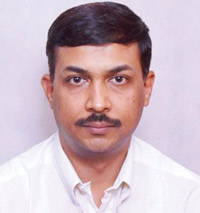
Jonar Nadar (Chairman, Logictivity Pty Ltd.) keeps the concept of teamwork aside and focuses on building the teams that work , in conversation with Sushmita Yadav

Q. You have conducted courses on technology, leadership, management, thinking skills, employee engagement, teamwork, advertising, change, fraud, terrorism and politics. What is the mantra behind managing so many diverse roles? What do you enjoy the most?
A. At the conclusion of my lectures, some people ask questions like, ‘Where do you get your material from?’, ‘Which books do you read?’ This points to a common problem: people presume that the answers lie in source material. Where have all the thinkers gone? I never read books to bolster the content for my lectures. The mantra behind my work is, ‘Know it first-hand’. I go out and enquire, probe, seek, investigate, research – first-hand. When I speak about a topic, it would be only after I have understood it for myself from the point of pain – meaning I go to where the pain (or opportunity) lies, and I make contact with the people at that front line. As for which I enjoy the most; I dare say that I cannot isolate my life. I am in a constant state of appreciation. When I fall or stumble, I am appreciative of the energy to pick myself up and try again. When I hit a brick wall and can see no immediate way out, I am grateful for the fighting spirit within me that spurs me to keep trying. I am glad that I have the skills to work independently, so that no one can ever hijack my success by saying something daft like, ‘Sorry, this cannot be done.’
Q. What do you consider as a leader’s most challenging job?
A. On the modern stage, leaders are constantly judged and misjudged. The hardest of all is to resist the temptation which says, ‘Given that I cannot please everyone, maybe I ought to please myself and make a decision that secures my position.’ It is at this point of ‘selfishness’ that the leader fails. To remove self-interest must be the toughest of all the tasks. Teaching about the duty of the leader, I implore young people to understand the seemingly inconsequential actions that compromise them – whether a free dinner hosted by a lobbyist, or a free gift disguised as a token of appreciation. All these things grow until the dinner becomes a large reception in their honour; and the token becomes a major stipend for services rendered. Such are the foundations of corruption. Corruption of the soul, in incremental, imperceptible steps, damages the leader’s independence. Click here to read more...

Read More IIPM Related Articles
Zee Business Best B-School Survey 2012
Prof. Arindam Chaudhuri's Session at IMA Indore
IIPM IN FINANCIAL TIMES, UK. FEATURE OF THE WEEK
IIPM strong hold on Placement : 10000 Students Placed in last 5 year
IIPM's Management Consulting Arm-Planman Consulting
Professor Arindam Chaudhuri - A Man For The Society....
IIPM: Indian Institute of Planning and Management
IIPM makes business education truly global
Management Guru Arindam Chaudhuri
Rajita Chaudhuri-The New Age Woman
IIPM B-School Facebook Page
IIPM Global Exposure
IIPM Best B School India
IIPM B-School Detail
IIPM Links
IIPM : The B-School with a Human Face

Monday, December 03, 2012

The biggest tool, is in the form of an open and transparent communication to all concerned regarding the plans, including sharing of vision, mission and desired business objectives.

Q. How do HR priorities undergo a change to support the turnaround?
A.
HR has to act as a facilitator, guide, mentor, communicator, strategist, path- breaker, and torchbearer. HR should play this role during the various facets of a turnaround plan, strategy and even at the execution stage of turnaround blueprint, including implementation of the 3R turnaround strategy, retrenchment, repositioning and reorganisation.

Q. Is there a turnaround story that has inspired you? Please share with us.
A.
The turnaround story that really inspires me even today is that of Indian Bank. This happened close to late 1990s, and it was undertaken in a well-planned and systematic manner. The result of the same is in front of us; Indian Bank continues to operate successfully as a nationalised bank with branches all over the country. Several case studies have been done and written over the turnaround of Indian Bank.

Q. What are the employee issues that are unique to the Indian corporate set up when an organisation undergoes this change?
A.
Typical employee issues that may be unique to the Indian set-up are many. The first in this list is job stability, including retrenchment and repositioning. Other issues of importance are: changed culture, new management introduced, new leadership team, new processes and systems, financial stability, dislocation, career progression, re-engineered HR policies and processes, reorganisation and changed organisational design, talent management, and decision making to name some. Read more..

Read More IIPM Related Articles
Zee Business Best B-School Survey 2012
Prof. Arindam Chaudhuri's Session at IMA Indore
IIPM IN FINANCIAL TIMES, UK. FEATURE OF THE WEEK
IIPM strong hold on Placement : 10000 Students Placed in last 5 year
IIPM's Management Consulting Arm-Planman Consulting
Professor Arindam Chaudhuri - A Man For The Society....
IIPM: Indian Institute of Planning and Management
IIPM makes business education truly global
Management Guru Arindam Chaudhuri
Rajita Chaudhuri-The New Age Woman
IIPM B-School Facebook Page
IIPM Global Exposure
IIPM Best B School India
IIPM B-School Detail
IIPM Links
IIPM : The B-School with a Human Face

Monday, November 26, 2012

Human Resource department needs to monitor and follow up to ensure employee morale does not take a beating, messages and policies are properly communicated and implemented.

Q. Discuss HR’s vital participation in the strategic and administrative “treatment” of a company during hard times.
A. HR needs to be truthful when announcing difficult decisions such as downsizing. The HR department needs to work closely with the CEO to ensure that the restructuring exercise is properly carried out and with the support of the staff. The companies will then know that people are not against bad news but they want to see quick and effective results.

Q. Have you come across some common employee expectations during turnaround?
A. Employees hate uncertainty. Therefore, it is important that the turnaround or restructuring plan should be shared with the staff to get their support. The management should treat the staff, who are retrenched, with respect as the remaining people are watching closely how their former colleagues are being treated.

The management should also direct the focus of the staff on the future and financial rewards when the company does a turnaround. It is important to turn the negative energy in to positive during the turnaround as negative energy impacts employees’ morale, hard work, and hope.

Q. Please elaborate on your principle: “Manage yourself with the head and others with the heart”.
A. The prime weakness of the external CEOs is that they do not know the existing team and the trend. This leads them to make decisions based on their own reasoning and without understanding the sentiments and background of the employees. In a restructuring exercise, one should use his head to plan and analyse, and the heart to energise and empathise with others. For example, a plan on the cost-cutting exercises with the head. However, when one implements it one needs to win the hearts to get the support of the people. Also, there arises the need to energise and motivate the workforce. Reda more...

Thursday, November 22, 2012

Not restricted to traditional practices alone, HR today seeks support and recognition from the CEO in driving change. - by IIPM Think Tank

In a CEO’s opinion the ‘real’ HR professional should have a profile matching the following: brain of Albert Einstein, charisma of J.F. Kennedy, negotiating skills of Henry Kissinger, marketing skills of Iacocca, hide of a rhinoceros, the soul of Mother Teresa, and stamina of Jackie Joyner-Kersee.

CEOs need credible HR partners who know the dynamic intersection of business results, customer expectations and people performance. By expecting more business acumen than ever from the HR function, CEOs have challenged HR leaders to redefine their roles and contribution. They feel HR executives have the capability to build trust, communicate and collaborate with others with professional compatibility, diplomacy and discretion.

A section of senior managers believe HR is a corporate Siberia with no visibility and accountability. They are perceived as being only able to deal with the softer side of business because they are diplomatic, typically positive in outlook and gracious. But the CEO, by contrast, requires an advisor who tells him or her what the key people issues are, and who rigorously influences him or her about the solutions.

Dr. Stephen R. Covey has rightly said “Management works in the system, leadership works on the system.” This clearly highlights one of the biggest expectations of a CEO from his HR manager. The emphasis is on the need of leadership that is skilled in identifying and developing talent.

A CEO expects the HR to identify the behaviours and skills that drive the organisation’s productivity and success. Senior HR executives are expected to be savvy interpreters of trends, with the ability to translate trends into valuable opportunities for the company, preparing the workforce to drive more productivity in the business. Read more...

Thursday, August 06, 2009

Not just about saving 2 buckets of water, or was it?


Professor Arindam Chaudhuri’s Profile

Brand: Surf
Agency: Lowe
This one not only blew the brand’s trumpet loud n’ clear, but also sent out a social message with Member of Parliament Shabana Azmi endorsing it enthusiastically. HUL claimed a powder that reduced water consumed in the washing of clothes and sold it as a social campaign to save water. Sales of Surf zoomed 15% after the campaign. Interestingly, before Shabana, HUL had test-launched this campaign with south Indian star Revathy Menon. Now that’s called testing waters... oops, in this case, saving water!

An Initiative of IIPM, Malay Chaudhuri and Arindam chaudhuri (Renowned Management Guru and Economist).

For More IIPM Info, Visit below mentioned IIPM articles.
IIPM
IIPM Best B-school
Four Phase of IIPM Global Plans
30 professors of international repute to IIPM
IIPM Global B-school
IIPM Alumni Officially on Facebook
IIPM Respected Business School

Wednesday, January 14, 2009

"vested interests"

How does one account for this paradox then? One is too old to work in the bureaucracy, but not too old to hold a major political portfolio! Neurologists say it is possible at age 75 to have an IQ of 100 and yet be able to give the correct answers of only half as many questions as at age 21.

Of course, retirement ages have been mandated for a purpose. A man of 60 may be in full control of his faculties, and yet lack the energy and zest for work of somebody half his age. You simply cannot get around these physiological facts. The reaction time slows down and various "vested interests" come into play. As one psychiatrist said of Shivraj Patil's repeated changing of suits after the Delhi blasts this year: "He is a narcissist obsessed with sartorial matters, unmindful of the country's safety!"

Officially, almost no young politician takes the retirement issue up for discussion. BJP spokesperson Rajiv Pratap Rudy, himself in his mid-40s, is one such. "Technically speaking there is no such provision in the Constitution. The age of an individual cannot define the limits of his contribution in politics. Each must decide for himself or herself how much work they have the energy to do," he says. D Raja, National Secretary of the Communist Party of India, agrees: "Politics is not like other professions. Politicians know when they should retire."

Says sociologist Vijay Lakshmi Nanda: "It is the job of the political parties to choose and raise the right kind of people. It is their job not to select and represent too old and inefficient representatives. If all the candidates are old, who are we going to vote for? The problem is the right kind of people are not reaching there." In most cultures, the young prefer to stay away from politics.....Continue

Friday, January 09, 2009

Madhya Pradesh Chief Minister Shivraj Singh Chauhan

How many new faces are expected in the new ministry?
Let’s keep that issue on the shelf for a while, please!

What are the major challenges you face in your second term?
Challenges are a constant reality. The BJP government has completed some major developmental projects in the last term. Some new projects have been worked out as well.

We started those projects with due dialogue and consultation with the people for whom those specific projects were meant. To do that, we organised massive mahapanchayats (public hearings). However, all the projects have not been completed, so we have to ensure that they come through. Our biggest challenge is to make Madhya Pradesh a fully developed state in the next five years.

What will be the priority sectors for the new government?
There are some formalities to set up the new government. These may be over soon. But work has not stopped. We have started work already. At the very outset, we have held a meeting on potable water. It is our top priority to give drinking water to all the areas of the state.

Besides, we shall work ceaselessly for the uplift of women. We shall make the projects that are running more effective. We shall take up the issue of large investments in the state and augment industrial growth with an eye to generating employment. Power generation is a top priority.

Even as Congress conceded defeat, yet they have promised to extend positive cooperation. How do you see that?
The BJP does not have reservations on taking help from anyone so long as it benefits the people of the state. We feel people must rise above sectarian politics and together participate in the development of the state.

We sought the support and mandate of the people precisely for this purpose, and we got their blessings for our work. We have always welcomed positive cooperation for the development of the state, which is our highest goal......Continue

Wednesday, January 07, 2009

Carnatic's digital incarnation

Lovers of Carnatic music rejoice! Besides the month-long classical music fair in the form of live concerts that will be held in the Tamil month of Margazhi (December 15 to January 15), you will now be able to enjoy such musical treats from the comfort of your neighbourhood multiplex. On December 18, "Margazhi Raagam", a 110-minute film of nine songs performed by popular Carnatic singers Bombay Jayasree and TM Krishna, will hit the big screens.

Bringing this whole new musical experience to you is Jayendra, director and well-known ad filmmaker. “Live concerts have their own charm, but they also come with their own disadvantages, like low audio quality and noise disturbances. Visually too the result is not so satisfying, keeping in mind the distance between the stage and the audience, and the unflattering lighting. Besides, the microphone positioned right in front of the singer makes it virtually impossible for the audience to see emotions on the singer’s face. There are a lot of factors like that. But in "Margazhi Raagam", such shortcomings have been erased,” Jayendra told TSI. ...Continue

Friday, January 02, 2009

India is still fumbling for a response to Pakistan in the aftermath of its worst ever terror strike, writes Ranjit Bhushan

So what can India do more substantially? According to former foreign secretary Kanwal Sibal, India should immediately suspend the composite dialogue with Islamabad, along with a slew of other measures: suspend rail and road communications, suspend cross-border and LoC border trade and even reduce Pakistan High Commission's staff strength.

Islamabad has already refused firmly to hand over either Dawood or Azhar. Some experts say that while the LeT is being accused of being the mastermind, there is enough to suggest that the well-trained commando killers were from Pakistan Army, engineered to create opportunities for moving their beleaguered troops from the Afghanistan border to the Indian side, particularly because American drones have continued to hit Pakistani positions on the Pakistan-Afghanistan border.

The US, aware of the potentially volatile situation in south Asia, and certain knowledge that if India engages Pakistan on its eastern border then its war on terror in Afghanistan would be compromised, rushed in Condoleezza Rice to assuage India’s feelings. And she commended India's restraint so far. But Rice told the media on her arrival: "I have said that Pakistan needs to act with resolve and urgency, and cooperate fully and transparently, and that message has been delivered."

In 2002, after the attack on the Indian Parliament, the then NDA government had backed the demarche with heavy troops mobilisation and a threat to fight a "once and for all" battle with Pakistan. That never happened. This time, however, the world waits with trepidition as to what the next move is going to be....Continue

Tuesday, December 23, 2008

What does one have to be -- and do -- to become a shankaracharya?

The authentic Hindu religious tradition prescribed a much more austere anointing procedure. The Sanskrit scripture Mathamnaya Upanishad clearly lays down the shankaracharyas’ selection process and in Mahanushashan Upanishad are listed the rules for eligibility. It is a foolproof process. The tradition is that shankaracharyas anoint their successors during their lifetime; following which the anointed person is granted recognition by the Kashi Vidvat Parishad. This is a 150-year-old organisation with 35 living members -- most of them eminent Sankrit scholars. So how come things have gone so horribly wrong? For, barring minor disputes over posts and perks, there seems nothing much wrong with the KVP’s activities. The rot that has set in is entirely due to various vested interests, which have raised at least three similar sounding committees like the Varanasi Vidvat Parisgad, the Varanaseya Vidvat Parishad and the Akhil Bhartiya Vidvat Parishad. And bodies like these have been covertly selling degrees and posts – with the result that dozens of self-styled shankaracharyas have sprung up in different parts of the country.

The life sketches of the likes of Sudhakar Dwivedi show how these nondescript people, who somehow found the money to buy their grandiloquent titles, came to sully and ultimately criminalise the faith. Dwivedi, the son of a police sub-inspector (who retired early this month) quit his job in 1993 to become Swami Amritanand. And then, along with his friend Rajesh Pachauri, he set up the Sharda Sarvagyapeeth in 1999. In 2003 he moved to Kashmir where he declared himself a shankaracharya.

The septuagenarian Shastri vividly remembers the 2003 developments. “KVP vice- president Ram Yatna Shukla and its spokesman Shivji Upadhyaya came to me with Pachauri to say they had convened a meeting of the KVP executive to anoint Amritanand as shankaracharya of Jammu. And they claimed to have the support of other KVP members like Adya Pradas Mishra, Rammurthy Chaturvedi, Rajeshwar Upadhyay, Vashishtha Tripathi and Paras Nath Tripathi. I objected on two counts. One, Jammu isn’t a peeth. The northern seat of Shankaracharya is in Badrinath. And two, I came to know that Dwivedi had two wives and that the matter was in court.”...Continue

Saturday, December 20, 2008

Farmers are reeling under power crisis and rain shortage

KARNATAKA : POWER CRISIS

The agricultural yield, including food grains and vegetables, have gone down by more than 50 per cent this year. Adding to the farmers’ woes, there was a loss of groundnut crop worth Rs 225 crores. Of the 1,45,533 hectares of land cultivated during the kharif season, 90,389 metric tonnes of crops in 1,41,730 hectares of land were spoiled, agriculture department officials informed. This ‘powerless’ situation has affected not only Chitradurga but farmers across the state. “Over 37 per cent of the land in Karnataka is cultivatable, and around 50 lakh acres of land is irrigated through pump sets. But shortage of rain, followed by severe power shortages, will only worsen the situation.

This is responsible for the spiraling prices of vegetables,” says KS Puttannaiah, president of Karnataka Rajya Raitha Sangha, who holds the government responsible for the current crisis. “The government tends to mislead the farmers, assuring them free power supply during the monsoons. But when the rain stops, the load shedding begins,” complained Kodihalli Chandrashekhar, working president of Karnataka state farmers’ association. Some drastic needs to be done to bail out the farmers. Now!....Continue

Wednesday, December 17, 2008

Global meltdown might not be that bad for India's commoners

India's real estate market too is witnessing some troubled times as prices are collapsing. Again, good news: prices here have always been irrational as demand for decent housing always outstripped supply, and for the fact that Indian real estate giants rarely make houses for the the masses. For them the market was always people from high income bracket and NRIs. With NRIs losing jobs faster than resident Indians, the crashing of prices will do more good than harm to the common man. And the news of lower inflation rates due to recession acts as an icing on the cake for him. This recession is a lesson on the risks of having an export-oriented economy. Interestingly, India's saving grace can be its large domestic market that can guarantee against vagaries of global fluctuations. Its time for India Inc to realise the efficacy of giving more importance to the needs of the common man lower down the pyramid. Telecom companies have shown how permeating down the socio-economic ladder have proved to be a boon for the industry thus making it one of the largest as well as the fastest growing markets of the world which, recession or no recession, continues to grow. Its now time for rest to follow the cue and unleash the potential of India’s latent but colossal rural market. Only that would ensure immunity from global recession. Certainly the common man would not be complaining about it, even if it's recession....Continue


Saturday, December 13, 2008

Cain and Abel revisited?

YSR’s heart overfloweth for the rights of the minorities, you bet. He is not just continuing with the benefits of Haj subsidy for the Muslims, he has thought up a new scheme for the Christians, modelled around the Haj facility, and has promised to do the same for Sikhs and Parsis as well. But will this ensure that Andhra people will agree to live under his dispensation happily ever after? No chance, for he has ended up splitting the Christians themselves because of a nuance that is typical of Andhra Christians.

Andhra Pradesh Chief Minister YS Rajasekhara Reddy is going to give all 'white-card' holding Christians Rs 20,000 as a subsidy for visiting the sanctums in the Holy Land. On the face of it, it is a ‘progressive move’, extending communal facilities and increasing benefits to Christians. But clearly, this is a case of trying to woo voters from that denomination. The state government is setting up a separate wing for Christians in the state’s minority welfare department, along with the constitution of Christian Minority Finance Corporation.

The Haj House in Hyderabad that hosts pilgrimage to Mecca will now play host to the Christians after the departure of last batch to the Haj on November 16. The state government has allocated a budget of Rs two crore for the financial year 2008-09 and the seven-day package is being organised by Andhra Pradesh State Minorities Finance Corporation. Mohd Ali Shabbir, minister for Minorities Welfare, said the funds allocated to the ministry would be dispersed to all minority groups according to their population and Rs 1.27 billion has already been allocated by the government for minorities' welfare in the 2008-09 budget. The Congress government claims that the budget was increased by five times during the last four years. ...Continue

Saturday, December 06, 2008

On 16th November, 1988, Benazir Bhutto was elected as the Prime Minister of Pakistan in the first ever open elections of the country.

I also remember that Bhutto’s stance to ease tension with India was resented by the establishment. There were accusations in the newspapers that Bhutto had passed on secrets to the Indian government regarding Sikh extremists who were allegedly trained in Pakistan. This was nothing new. In 1972, when her father Zulfikar Ali Bhutto signed the historic Simla Accord, he was also accused by right-wing parties of compromising on the national interests. Bhutto studied in elite schools and was not proficient in the national language Urdu when she entered the realm of politics but she was quick to learn the language, though the common man was amused at her accent and grammatical mistakes.

She was also an ‘eastern’ wife. During a book launch ceremony at Karachi Press Club, when a stringer from TIME magazine asked her if it was true that she had strained relations with her husband, she became furious and snubbed him. No wonder, she always denied corruption charges against Zardari.

Strangely enough, despite the fact that she studied at Harvard’s Radcliffe College and Oxford, she was superstitious and used to visit faith healers, anxious to know about her fate. At the same time, she was also daring and would not hesitate to visit places where security was inadequate. In fact, her tragic death on December 27, 2007, in Rawalpindi, was the result of a security lapse.

Like her father, Bhutto too had a photographic memory and party workers would be astonished when she would address them right even if she had met them only once.

I believe that her brief tenure as Pakistan’s Prime Minister (1988-90 and 1993-96), and exit from power, could be attributed to mainly two factors: One, her husband Asif Ali Zardari’s passion to accumulate wealth, and two, her inability to organize Pakistan People’s Party on democratic lines. Pakistan People’s Party always remained under a dynasty.....Continue

Friday, August 08, 2008

Why MP is considered the ‘next’ destination by entrepreneurs & tourists?

It’s right at the madhya (centre), and it deserves attention. But there’re more reasons why MP is considered the ‘next’ destination by entrepreneurs & tourists alike – call it the result of ‘completely revamping and professionalising’ the overall state machinery (be it for birds or for the bucks!). sreoshi ghose presents an account...

Giving them company is the other Birla, the Birla Corporation Ltd (from the MP Birla group) that has invested an incredible $62 million in its cement plants at Satna. While on one hand, cement is a major thriving sector in MP, there are players from other sectors that are enjoying every moment of their MP ride like the auto, pharma, FMCG & beverage & IT sectors, as Ashwani Lohani, MD, Madhya Pradesh State Tourism Development Corporation (MPSTDC) asserts, “The private sector investment in various sectors in the state has witnessed a boom in the last three years due to the extremely proactive role being played by the government.”

The auto sector is mainly based in Pithampur, near Indore. From Bajaj Tempo to Eicher Motors Ltd. (who have worked their way up the ladder of economic prosperity over the past two decades) to Kinetic Motors (which has come a long way in the past half-a-decade), all have a plant there. Eicher’s manufacturing facility at Pithampur, has an annual production capacity of 20,000 units. Its experience in the state as a company official terms it, has been “excellent”. Even Nicholas Piramal has a pharma R&D & production plant in Pithampur. Then there are other districts which have attracted major investments from other sectoral giants like the Raisen district, where beverage major Coca-Cola India has a plant and Procter & Gamble has an advanced technology detergent manufacturing plant. In Chindwara district, there is an HUL unit and in Malanpur, there is a Cadbury India plant. Indore among many investors has Ruchi Soya Industries Ltd. (edible oil refinery) and IPCA Laboratories Ltd. (drug facility). IPCA also has a plant at Ratlam. Then there is a Ranbaxy Laboratories plant at Dewan district.

For more articles, Click on IIPM Article.

Source : IIPM Editorial, 2008

An Initiative of IIPM, Malay Chaudhuri and Arindam chaudhuri (Renowned Management Guru and Economist).

Read these article :-
ZEE BUSINESS BEST B SCHOOL SURVEY
B-schooled in India, Placed Abroad (Print Version)
IIPM in Financial times (Print Version)
IIPM makes business education truly global (Print Version)
The Indian Institute of Planning and Management (IIPM)
IIPM Campus

For More IIPM Info, Visit below mentioned IIPM articles.
4Ps Power Brand Awards 2007
When IIPM comes to education, never compromise
IIPM, GURGAON
IIPM - Admission Procedure
IIPM is A World of Career
Why Study Abroad When IIPM Gives You 3 global Advantages!


Monday, July 21, 2008

Sugary sweet petrol!


When IIPM comes to education, never compromise

Classy backward integration move by oilcos

Soon we may have Reliance Sugar and Hindustan Petroleum Sugar, just like we have like Tata Salt. And what makes us think so? Well, of late, oil companies have got busy in sugar exploration than just oil exploration. Mukesh Ambani’s RIL, HPCL and other players have acquired defunct sugar mills on a long term lease basis in the state of Bihar. Commenting on the occasion, Nitish Mishra, Sugarcane Development Minister, Bihar says, “RIL, HPCL, besides Rollon and a state-based industry were on Friday awarded financial contracts for the revival of 6 of the 13 state-run sugar mills in Bihar.”

On one hand, the move will pump in some life into these sick mills and on the other, the government hopes to mop up as much as Rs.3 billion from these deals. But the question really is: Why are these oil majors making sugar sector their next juncture?

For companies, the deal is a masterstroke as it will ensure a cheap and a steady source of ethanol. At the moment, a blend of 10% ethanol is allowed in petrol. However, limited supply and therefore rising prices of raw material for making ethanol was proving to be a deterrent till the moment. But with the acquisition of the sugar mills, the oil companies have struck a backward integration masterstroke which also saves the environment. Now, finally things seem to becoming sweet for these companies. Like SAIL & the Tata Group who long back acquired captive iron-ore mines and are now enjoying its benefits, these oil majors too have securitised key raw material supply in ethanol production which will pay them off in future. Surely these sugary sweet moves will fuel the growth of the petroleum giants...

Edit bureau: Siddharth Nahata

For more articles, Click on IIPM Article.

Source : IIPM Editorial, 2008

An Initiative of IIPM, Malay Chaudhuri and Arindam chaudhuri (Renowned Management Guru and Economist).

Read these article :-
B-schooled in India, Placed Abroad (Print Version)
IIPM in Financial times (Print Version)
IIPM makes business education truly global
The Indian Institute of Planning and Management (IIPM)
IIPM Campus

For More IIPM Info, Visit below mentioned IIPM articles.
IIPM, GURGAON
IIPM - Admission Procedure
IIPM is A World of Career
Why Study Abroad When IIPM Gives You 3 global Advantages!