Showing posts with label BBA. Show all posts

Wednesday, July 31, 2013

An account of how labour unions in europe emerged, crushed and re-emerged, and the prevailing trends in the crisis-hit eurozone

Between countries, there are substantial differences related to the success of company agreements – even within the same company. For example, the Tesco Partnership Agreement is the largest private sector collective agreement in the UK, but in Hungary no agreement between Tesco and the KASZ (Hungarian trade union) has been signed – though negotiations with KASZ have been going on for three years. However, in Spain, one of the immediate effects of recession on IR in the commerce sector and in other sectors generally was a slowing down of collective bargaining during 2009. There was no framework agreement on collective bargaining, which since 2002 has guided the evolution of wages and other matters. During 2009, many collective agreements were left unsigned, due to lack of consensus. The situation, however, improved after an agreement in February 2010.

Britain’s general strike, 1926
One of the largest general strikes struck Britain on May 3, 1926, and lasted for 10 days. The event was a watershed for labour relations in Britain, which bitterly divided opinion. The strike was called by the Trades Union Congress (TUC) in support of striking coal miners in the North of England, Scotland and Wales. The miners were making a stand against an enforced pay cut. It was the latest in a long series of industrial disputes that had dogged the coal industry since the end of the First World War and created real hardship for mining families.

Although the dispute began in the mining areas, one of the trigger events took place in London, when the Daily Mail’s Fleet Street printers refused to print a leading article criticising trade unions. Other print workers also downed tools. The T.U.C. activated its plans for sympathetic strike action and called out all trade union members in essential industries. Click here to read more..

Like us and read IIPM Think-Tank articles on facebook

Thursday, June 06, 2013

The system overhaul

I often wonder, why I still remember some of my nursery rhymes but not the teachers who taught them. Perhaps, the rhymes are so deeply entrenched in my system that forgetting them is out of question. Also, I must confess the delivery of those rhymes in my early formative years was innately creative to keep me engrossed. Remembering a particular teacher has a lot to do
with remembering things associated with him or her.

One barely remembers 100 per cent of what one was taught in school. And of all that one remembers, pedagogy and teaching methods have a significant role in effective recall.

Recently, a report about teacher education in Scotland laid emphasis on grooming teachers for future. The findings from international research on teaching and educational leadership highlighted a number of key features of good teachers. It demands teachers to be reflective, creative, committed to profession and development of each child, passionate about learning, enthusiastic about their subject and keen on participating in their own personal learning and development.

A survey on teacher recruitment and retention in the United States, published by Scholastic Inc., throws light on people’s perception on retaining new teachers. Around 80 per cent respondents mentioned the need to start with higher salaries. Eight per cent expressed the need for informal peer support and formal mentoring programmes. Quoting a teacher, the report said, “Although salaries are important, more money alone will not assure us of adequate number of prepared teachers. Support from administrators and fellow teachers is also important.”

The Emerging Directions in Global Education (EDGE) in its 2009 report, ‘Faculty Recruitment and Retention - The Issues and Challenges’ revealed that recruiting and retaining talent is a major challenge for every institution in India at present. The survey suggests a competitive compensation package and other employee benefits to check the attrition. According to the survey findings, introducing innovative HR tools in line with the corporate sectors is likely to bring down the attrition rate to some extent. Click here to read more IIPM Articles...

Thursday, February 28, 2013

Learning, a teamwork

Q. How can the current state of academia be improved?
A. A lot of teacher training focused on developing skills is required. The emphasis should be on a model that focuses on practical rather than theoretical aspect of learning.

Q. Why do we see more women in teaching?
A. In India, Sri Lanka, Pakistan and Bangladesh, you will mostly find female teachers because they feel the teaching job is ideal for them. Even I started my career as a teacher and again I wish to go back to teaching some day.

Q. What made you switch to the corporate side?
A. Hailing from a business family, I felt there was much more I could do than just teaching. However, I think teacher training is also a key marketing strategy. If we offer training, it will reflect in students’ performance.

Q. Does the batch strength affect the efficiency of a teacher?
A. Yes, it does affect especially in terms of practical offering. We feel that lesser number are better.

We are a little slow in grasping online learning. Pearson is shifting its focus on i-Pad-based learning and we are also moving into digital content. We have digi-board solutions and interactive board solutions where our curricula is mapped to the digital content. Teachers are also trained to use them. We even have printed textbooks that have interactive stuff and have a system where teachers can post homework on the internet. Click here to read full interview..

Read More IIPM Related Articles
Zee Business Best B-School Survey 2012
Prof. Arindam Chaudhuri's Session at IMA Indore
IIPM IN FINANCIAL TIMES, UK. FEATURE OF THE WEEK
IIPM strong hold on Placement : 10000 Students Placed in last 5 year
IIPM's Management Consulting Arm-Planman Consulting
Professor Arindam Chaudhuri - A Man For The Society....
IIPM: Indian Institute of Planning and Management
IIPM makes business education truly global
Management Guru Arindam Chaudhuri
Rajita Chaudhuri-The New Age Woman
IIPM B-School Facebook Page
IIPM Global Exposure
IIPM Best B School India
IIPM B-School Detail
IIPM Links
IIPM : The B-School with a Human Face

Monday, December 10, 2012

Jonar Nadar (Chairman, Logictivity Pty Ltd.) keeps the concept of teamwork aside and focuses on building the teams that work , in conversation with Sushmita Yadav

Q. You have conducted courses on technology, leadership, management, thinking skills, employee engagement, teamwork, advertising, change, fraud, terrorism and politics. What is the mantra behind managing so many diverse roles? What do you enjoy the most?
A. At the conclusion of my lectures, some people ask questions like, ‘Where do you get your material from?’, ‘Which books do you read?’ This points to a common problem: people presume that the answers lie in source material. Where have all the thinkers gone? I never read books to bolster the content for my lectures. The mantra behind my work is, ‘Know it first-hand’. I go out and enquire, probe, seek, investigate, research – first-hand. When I speak about a topic, it would be only after I have understood it for myself from the point of pain – meaning I go to where the pain (or opportunity) lies, and I make contact with the people at that front line. As for which I enjoy the most; I dare say that I cannot isolate my life. I am in a constant state of appreciation. When I fall or stumble, I am appreciative of the energy to pick myself up and try again. When I hit a brick wall and can see no immediate way out, I am grateful for the fighting spirit within me that spurs me to keep trying. I am glad that I have the skills to work independently, so that no one can ever hijack my success by saying something daft like, ‘Sorry, this cannot be done.’
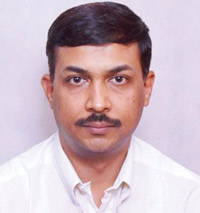
Q. What do you consider as a leader’s most challenging job?
A. On the modern stage, leaders are constantly judged and misjudged. The hardest of all is to resist the temptation which says, ‘Given that I cannot please everyone, maybe I ought to please myself and make a decision that secures my position.’ It is at this point of ‘selfishness’ that the leader fails. To remove self-interest must be the toughest of all the tasks. Teaching about the duty of the leader, I implore young people to understand the seemingly inconsequential actions that compromise them – whether a free dinner hosted by a lobbyist, or a free gift disguised as a token of appreciation. All these things grow until the dinner becomes a large reception in their honour; and the token becomes a major stipend for services rendered. Such are the foundations of corruption. Corruption of the soul, in incremental, imperceptible steps, damages the leader’s independence. Click here to read more...

Read More IIPM Related Articles
Zee Business Best B-School Survey 2012
Prof. Arindam Chaudhuri's Session at IMA Indore
IIPM IN FINANCIAL TIMES, UK. FEATURE OF THE WEEK
IIPM strong hold on Placement : 10000 Students Placed in last 5 year
IIPM's Management Consulting Arm-Planman Consulting
Professor Arindam Chaudhuri - A Man For The Society....
IIPM: Indian Institute of Planning and Management
IIPM makes business education truly global
Management Guru Arindam Chaudhuri
Rajita Chaudhuri-The New Age Woman
IIPM B-School Facebook Page
IIPM Global Exposure
IIPM Best B School India
IIPM B-School Detail
IIPM Links
IIPM : The B-School with a Human Face

Monday, December 03, 2012

The biggest tool, is in the form of an open and transparent communication to all concerned regarding the plans, including sharing of vision, mission and desired business objectives.

Q. How do HR priorities undergo a change to support the turnaround?
A.
HR has to act as a facilitator, guide, mentor, communicator, strategist, path- breaker, and torchbearer. HR should play this role during the various facets of a turnaround plan, strategy and even at the execution stage of turnaround blueprint, including implementation of the 3R turnaround strategy, retrenchment, repositioning and reorganisation.

Q. Is there a turnaround story that has inspired you? Please share with us.
A.
The turnaround story that really inspires me even today is that of Indian Bank. This happened close to late 1990s, and it was undertaken in a well-planned and systematic manner. The result of the same is in front of us; Indian Bank continues to operate successfully as a nationalised bank with branches all over the country. Several case studies have been done and written over the turnaround of Indian Bank.

Q. What are the employee issues that are unique to the Indian corporate set up when an organisation undergoes this change?
A.
Typical employee issues that may be unique to the Indian set-up are many. The first in this list is job stability, including retrenchment and repositioning. Other issues of importance are: changed culture, new management introduced, new leadership team, new processes and systems, financial stability, dislocation, career progression, re-engineered HR policies and processes, reorganisation and changed organisational design, talent management, and decision making to name some. Read more..

Read More IIPM Related Articles
Zee Business Best B-School Survey 2012
Prof. Arindam Chaudhuri's Session at IMA Indore
IIPM IN FINANCIAL TIMES, UK. FEATURE OF THE WEEK
IIPM strong hold on Placement : 10000 Students Placed in last 5 year
IIPM's Management Consulting Arm-Planman Consulting
Professor Arindam Chaudhuri - A Man For The Society....
IIPM: Indian Institute of Planning and Management
IIPM makes business education truly global
Management Guru Arindam Chaudhuri
Rajita Chaudhuri-The New Age Woman
IIPM B-School Facebook Page
IIPM Global Exposure
IIPM Best B School India
IIPM B-School Detail
IIPM Links
IIPM : The B-School with a Human Face

Monday, November 26, 2012

Human Resource department needs to monitor and follow up to ensure employee morale does not take a beating, messages and policies are properly communicated and implemented.

Q. Discuss HR’s vital participation in the strategic and administrative “treatment” of a company during hard times.
A. HR needs to be truthful when announcing difficult decisions such as downsizing. The HR department needs to work closely with the CEO to ensure that the restructuring exercise is properly carried out and with the support of the staff. The companies will then know that people are not against bad news but they want to see quick and effective results.

Q. Have you come across some common employee expectations during turnaround?
A. Employees hate uncertainty. Therefore, it is important that the turnaround or restructuring plan should be shared with the staff to get their support. The management should treat the staff, who are retrenched, with respect as the remaining people are watching closely how their former colleagues are being treated.

The management should also direct the focus of the staff on the future and financial rewards when the company does a turnaround. It is important to turn the negative energy in to positive during the turnaround as negative energy impacts employees’ morale, hard work, and hope.

Q. Please elaborate on your principle: “Manage yourself with the head and others with the heart”.
A. The prime weakness of the external CEOs is that they do not know the existing team and the trend. This leads them to make decisions based on their own reasoning and without understanding the sentiments and background of the employees. In a restructuring exercise, one should use his head to plan and analyse, and the heart to energise and empathise with others. For example, a plan on the cost-cutting exercises with the head. However, when one implements it one needs to win the hearts to get the support of the people. Also, there arises the need to energise and motivate the workforce. Reda more...

Thursday, November 22, 2012

Not restricted to traditional practices alone, HR today seeks support and recognition from the CEO in driving change. - by IIPM Think Tank

In a CEO’s opinion the ‘real’ HR professional should have a profile matching the following: brain of Albert Einstein, charisma of J.F. Kennedy, negotiating skills of Henry Kissinger, marketing skills of Iacocca, hide of a rhinoceros, the soul of Mother Teresa, and stamina of Jackie Joyner-Kersee.

CEOs need credible HR partners who know the dynamic intersection of business results, customer expectations and people performance. By expecting more business acumen than ever from the HR function, CEOs have challenged HR leaders to redefine their roles and contribution. They feel HR executives have the capability to build trust, communicate and collaborate with others with professional compatibility, diplomacy and discretion.

A section of senior managers believe HR is a corporate Siberia with no visibility and accountability. They are perceived as being only able to deal with the softer side of business because they are diplomatic, typically positive in outlook and gracious. But the CEO, by contrast, requires an advisor who tells him or her what the key people issues are, and who rigorously influences him or her about the solutions.

Dr. Stephen R. Covey has rightly said “Management works in the system, leadership works on the system.” This clearly highlights one of the biggest expectations of a CEO from his HR manager. The emphasis is on the need of leadership that is skilled in identifying and developing talent.

A CEO expects the HR to identify the behaviours and skills that drive the organisation’s productivity and success. Senior HR executives are expected to be savvy interpreters of trends, with the ability to translate trends into valuable opportunities for the company, preparing the workforce to drive more productivity in the business. Read more...

Thursday, November 01, 2012

SARAH CORNALLY FOUNDER & MANAGING DIRECTOR, CORNALLY ENTERPRISES Learning lingua franca of the boardroom

With over 25 years as a leadership and management consultant, Ms. Sarah Cornally specialises in developing leaders to create culture that enables organisations to thrive. Ms. Cornally is a leading expert in organisational dynamics, examining culture and strategy of senior executives and leadership at the boardroom level. She has co-authored several books such as ‘Turning Strategic Intent into Real Results’.

Q. How do you see HR’s role as a strategic business partner?
A. Strategy is how you go about bringing a vision from an idea into existence. In business, it requires understanding all the forces at play in the marketplace, deciding how you will create value by mobilising resources that fulfill the purpose of an organisation. Consulting with organisations where there are co-creative relationships between the CEO, CFO, COO, CIO and CHRO gives a clear line of sight to the contribution each function plays in bringing the vision into being.

This requires the CHRO to understand the business strategy from a commercial perspective and all its implications for the organisational design, development and culture – both short and long term. CHRO should be able to demonstrate credible knowledge in understanding what the business strategy demands from various functions of the business and how HR can be a partner to enable this to work effectively.

Q. What does the leadership expect from HR?
A. The leadership needs a well-designed organisation that functions effectively to enable the business strategy to be implemented in the most effective and well-leveraged way that embodies their brand and strengthens their reputation. They need to be attractive to the kind of talent they need, recruit them well and be able to align them to deliver the results and retain them, while optimising their levels of engagement and contribution. They need to grow their future leaders to ensure continuity and evolution consistent with their long-term vision. Creating systems and processes which make sure that they meet all their responsibilities towards the employees and other stakeholder obligations is essential.

The board is concerned about organisational effectiveness and their stewardship responsibility regarding the health of the organisation and factors that impact on organisational performance. The directors need to have accurate picture of the organisation to exercise their responsibilities and work with management. The HR executives need to build understanding in the boardroom by speaking boardroom language and framing messages in meaningful ways. Click here to read full interview...

Read More IIPM Related Articles
Zee Business Best B-School Survey 2012
Prof. Arindam Chaudhuri's Session at IMA Indore
IIPM IN FINANCIAL TIMES, UK. FEATURE OF THE WEEK
IIPM strong hold on Placement : 10000 Students Placed in last 5 year
IIPM's Management Consulting Arm-Planman Consulting
Professor Arindam Chaudhuri - A Man For The Society....
IIPM: Indian Institute of Planning and Management
IIPM makes business education truly global
Management Guru Arindam Chaudhuri
Rajita Chaudhuri-The New Age Woman
IIPM B-School Facebook Page
IIPM Global Exposure
IIPM Best B School India
IIPM B-School Detail
IIPM Links
IIPM : The B-School with a Human Face

Thursday, October 25, 2012

Mahesh Gupta (Founder and Chairman, Kent RO Systems ltd.) tells Schweta Chaturvedi about The Voyage of Discovery That Enabled him to Touch Unexplored Shores

Asked to what extent rewards play a role in motivating people, he avers that “motivation to my mind is a very negative term. Whatever motivation you give today becomes a demotivation tomorrow. Bring in belongingness instead of motivation.” If you succeed in doing that, he is your person. Though, the challenge is to implement it in big organisations, he points out.

Highlighting the future path, he says much needs to be done as penetration of water purifier is only four per cent in India at present. More such appliances are required. Kent strives to provide people quality water, air and fuel and its future endeavours will be towards innovating, evolving and producing better products.

Mr. Gupta, however, feels that family should not be neglected in this process. “I still need to achieve a balance between my work and personal life. Though I often get away by saying I am a workaholic and at least not an alcoholic,” his prompt reply left us in splits as we took his leave. Read More..

Read More IIPM Related Articles
Zee Business Best B-School Survey 2012
Prof. Arindam Chaudhuri's Session at IMA Indore
IIPM IN FINANCIAL TIMES, UK. FEATURE OF THE WEEK
IIPM strong hold on Placement : 10000 Students Placed in last 5 year
IIPM's Management Consulting Arm-Planman Consulting
Professor Arindam Chaudhuri - A Man For The Society....
IIPM: Indian Institute of Planning and Management
IIPM makes business education truly global
Management Guru Arindam Chaudhuri
Rajita Chaudhuri-The New Age Woman
IIPM B-School Facebook Page
IIPM Global Exposure
IIPM Best B School India
IIPM B-School Detail
IIPM Links
IIPM : The B-School with a Human Face

Thursday, November 13, 2008

At Microsoft, it’s not about filling numbers but hiring right talent, finds surbhi chawla

Q: Are there other specific programmes to develop and nurture innovation and leadership within the organisation?
JG: Microsoft focuses a lot on leadership. We’ve individual one-on-one leadership programmes where one learns different leadership skills. On reaching a certain level, the emphasis on leadership increases as there is a very set criteria on what competencies you get measured on and there is a very programmatic way of how you develop as a leader.

Q: Any USP in terms of the HR practices followed at Microsoft.
I personally feel that HR as a function should enable and drive the change for the entire organisation. I don’t think HR should do what they are told to do. On the contrary they should do what they feel is right for the company. HR should be in the driver’s seat vis-à-vis being in the follower’s seat. Microsoft India and the economy that we work in is undergoing significant change, so I think we are always looking ahead of time and figuring out what would be different 2-3 years from now and how we can stay ahead of the game and that is our gameplan. ..read more

Source : IIPM Editorial, 2008
An Initiative of IIPM, Malay Chaudhuri and Arindam chaudhuri (Renowned Management Guru and Economist).

Read also :-

Thursday, November 06, 2008

Beyond everyone’s forecast, European economies are now the biggest sufferers of the US subprime crisis

What began as a problem in a single sector, in a single economy (US housing market) has today metastasized into severe dislocations in broader credit and funding market. The crisis has moved beyond the US and subprime market to prime real estates markets, consumer credits and corporate credit markets. Global Financial Stability MapAmid such a milieu the spill over of the man made crisis in the global financial market is being governed by the trio comprising – weakening balance sheet, continuing de-leveraging process and the burgeoning challenges of the macroeconomic environment. Says Tine Olsen, Economist, Moody’s Economy, “A year after the subprime shock, the global economy is still suffering, and the end of the credit crisis is nowhere in sight.”
In fact a year after the genesis of the subprime shock, similar features are beginning to emerge in Europe. Be it losses in terms of subprime, ABS (asset backed securities), ABS CDOs (credit default obligation) or Conduits/SIV (special investment vehicle), Europe is only next to US. Signs of a downturn are becoming all the more evident in European housing market. Market prices of property derivatives today are suggestive of an outright home price decline in the UK with a time lag of around two years (wrt US). At a time when the lenders are tightening standards, many borrowers of fixed rates in UK are set to witness a rate increase of 100 to 200 basis points (bps). This will in all certainty add to yet another source of stress in the already stressed market. It is but obvious that with an increased stress (result of the spill over) write offs and repossessions are set to increase....Continue

Source : IIPM Editorial, 2008
An Initiative of IIPM, Malay Chaudhuri and Arindam chaudhuri (Renowned Management Guru and Economist).

Read also :-

Tuesday, May 29, 2007

Brand : Bajaj Avenger

Agency : Lowe
Baseline : Feel like god

Description: A dude in a black helmet, atop a spanking new Bajaj Pulsar bike, is speeding along a mountainous terrain. The graphics on the screen read: India all out 191, our dude thinks to himself “I forgive the batsmen.” Next, the graphic reads: Bangladesh 192/5 (48.4 overs), our hero says that he “forgives the bowlers.” Last, the graphic says: Team India returns home, and our benevolent man “forgives them all.” As he presses the accelerator down harder, our man says “I feel like God”...

4Ps Take: Wow, what a classy act from Bajaj & Co... Although the ad is an exact replica of the brand’s previous ‘I feel like God’ ad, the clever infusion of current events and specifically the red hot issue of Team India’s debacle in the Caribbean, put this act in a different league altogether.
This one virtually thrives on the overriding sentiments of anger, despair and anguish amidst the Indian janta over Team India’s debacle in World Cup 2007. At the end of it all, one is left wondering whether the creative honchos at Lowe are making a mockery of Team India or actually empathise with their (lost?) cause! Whatever be the case, this one comes as a master stroke to establish that elusive consumer connect. A powerful idea and an equally powerful execution...

For Complete IIPM Article, Click on IIPM Article

Source : IIPM Editorial, 2006

An IIPM and Management Guru Prof. Arindam Chaudhuri's Initiative

Read more:-

Wednesday, May 09, 2007

Another trailblazer...

O wing to a dismal show by Indian automobile companies in March, analysts are busy watering down yearly sales expectations. Rising car prices & mounting interest rates have forced customers to postpone purchases, leading to a meager 2.89% sales growth in March 2007 – the worst performance in 13 months.

There remains one segment in resurgence – the fiercely fought mid-size (A3) segment (increase in sales by 48.05% over February 2007). And to further liven it up, Mahindra & Mahindra (M&M) has launched its mid-size warrior, Logan, in partnership with Renault. Anand Mahindra, VC & MD, M&M Ltd., said, “The Logan is a milestone for us as it marks our entry into the most competitive segment of the market.” Logan’s Gl 1.4 petrol model starts at Rs.427,950 while the DLE 1.5dci diesel version is priced at Rs.547,064, making it the cheapest car in A3 after Tata Indigo and Maruti Esteem, hence targeting the B/B+ segment as well. Auto analyst Murad Ali Baig states to B&E, “It’s the price that makes it (Logan) extraordinary.”

According to SIAM, Honda has attained leadership in the A3 segment selling 5,164 units for March 2007, followed by Ford Motors (5,139 units) & Tata Motors (4,368 units). It would not be a cakewalk for Logan in a segment that offers almost everything from Honda’s elegance to Ford’s resilience, but it’s entry has intensified competition in the A3 segment.

For Complete IIPM Article, Click on IIPM Article

Source : IIPM Editorial, 2006

An IIPM and Management Guru Prof. Arindam Chaudhuri's Initiative

Read more:-

· My Blog
· IIPM News
· IIPM : IIPM Links
· IIPM: More about IIPM
· IIPM Alliances - IIPM - by RAVI
· IIPM PUBLICATION
· IIPM: The Indian Institute of Planning and Management-------